Accountability Stays Human: The Accountability Proxy
Updated June 21, 2026
Series: Safe Autonomy in the Real World (5 parts)
- Safe Autonomy in the Real World: 4 Lessons
- Takeaway A: Reveal Is Not Optional
- Takeaway B: Structure Beats Prompts
- Takeaway C: Interfaces Define Capability and Risk
- Takeaway D: Accountability Stays Human ← You are here
Organizations don't run on labor.
They run on liability and ownership.
So when people ask “can agents do the work?”, enterprises are quietly asking something else:
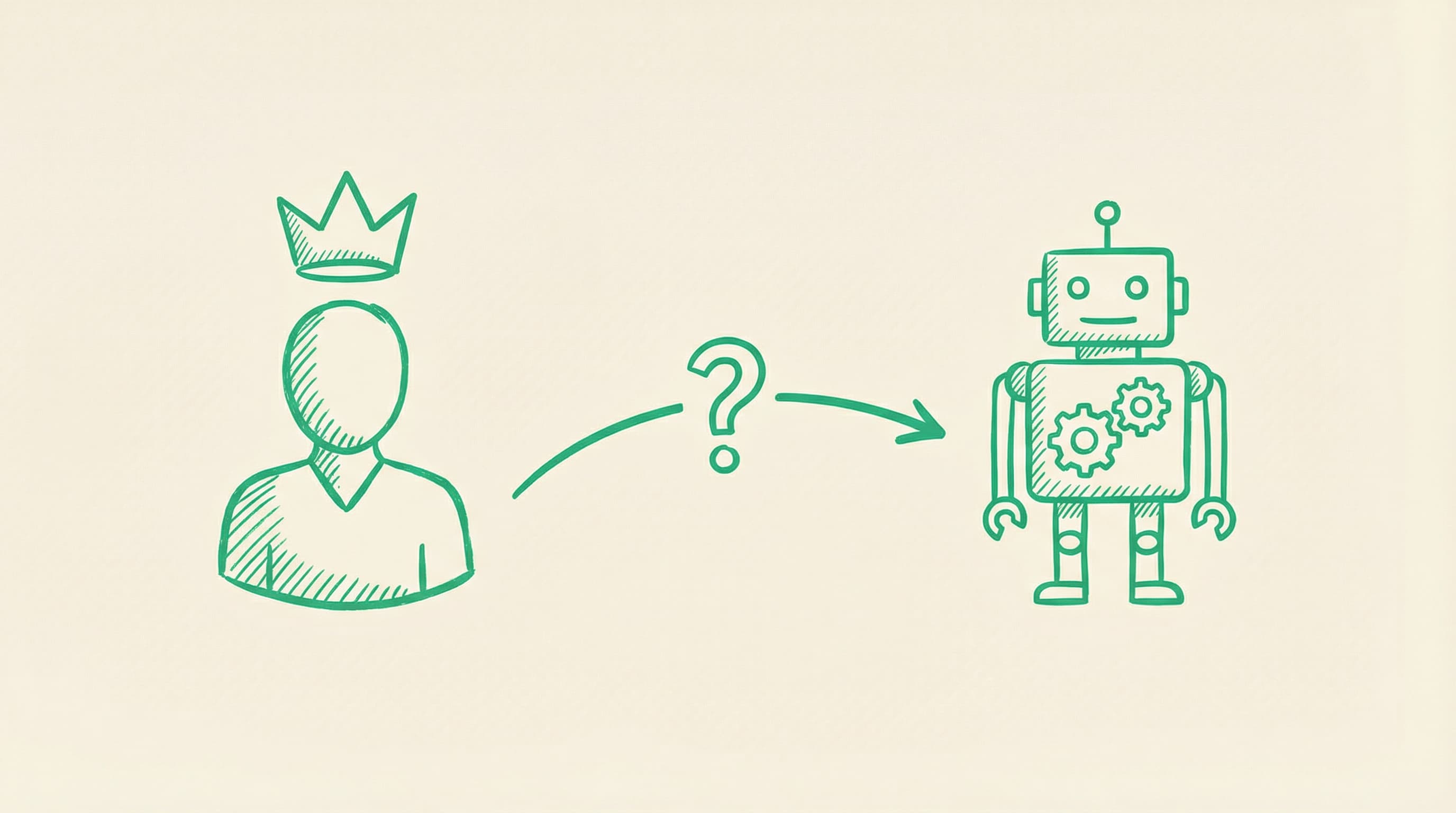
Who is accountable when the agent acts?
Enterprises don't fear autonomy. They fear unowned action.
1) The problem (autonomy concentrates responsibility)
Autonomy doesn't eliminate responsibility. It concentrates it.
As agents take on more scope, the cost of being wrong becomes larger — and the need for governance becomes more urgent:
- who can stop the system?
- who can roll it back?
- who can explain it later?
- who carries the consequences?
If no one can answer those questions, the organization can't deploy the agent safely — no matter how capable it looks in a demo. Courts are already enforcing this principle: in Moffatt v. Air Canada (2024), a tribunal rejected Air Canada's argument that its chatbot was a "separate legal entity," holding the company liable for its AI's outputs. And in Mobley v. Workday (2024), a federal court applied agency theory to hold an AI vendor directly liable for discriminatory hiring decisions.
Autonomy is borrowed authority. Accountability is the debt.
2) The case study (evidence slice)
In a published live-environment evaluation, researchers treated runtime controls as baseline: monitoring, safeguards, and termination ability were not optional.
Source: https://arxiv.org/abs/2512.09882
Evidence points (kept abstract on purpose):
- strict safeguards and monitoring/termination controls were used in the live trial
- governance-in-the-loop was treated as a runtime requirement, not a one-time review
The real-world lesson isn't “agents can act.” It's “agents must be governable while acting.”
3) The takeaway (D) stated plainly
Every agent needs an accountable human behind it, plus runtime controls.
This is the accountability proxy: a named owner whose job is to make the system safe to delegate to.
4) What this changes in practice
Patterns
Define an accountability proxy (single named owner per agent/system)
That owner:
- sets scope and objectives
- scopes permissions and boundaries
- defines stop conditions and escalation paths
- owns the operational metrics
- is accountable for incident response and remediation
Make runtime governance non-negotiable
At minimum:
- kill switch (fast stop)
- rollback path (undo)
- audit trails (who/what/why)
- rate limits and budgets (contain blast radius)
- approvals for high-impact actions (policy tied to confidence and impact)
Use a deployment ladder
Safe autonomy matures through stages — an approach with deep precedent. The SAE J3016 standard defines six levels of driving automation (0-5), adopted by NHTSA as the US standard, where each level requires specific human oversight mechanisms before progressing.
- suggest
- draft
- execute in low-risk zones
- expand only with measured reliability
The cost of skipping the ladder is well-documented: the 2024 CrowdStrike outage crashed 8.5 million systems within ~90 minutes because a faulty update was deployed globally without canary or staggered rollout, causing an estimated $10+ billion in damages. Post-incident, CrowdStrike committed to implementing the exact progressive deployment approach described here. Industry data shows progressive rollouts reduce deployment failures by 40%.
Trust doesn't leap. It ladders.
Protect availability (the inviolable constraint)
Safe autonomy must never break availability. Every agent deployment requires:
Resource budgets:
- Token budgets per task/session
- API call rate limits
- Memory and CPU limits per execution
- Storage quotas for artifacts
Timeout enforcement:
- Maximum execution time per task (hard limit, not advisory)
- Maximum wait time for external dependencies
- Automatic termination on timeout
Circuit breakers:
- Error rate threshold triggers pause
- Minimum cool-down before retry
- Escalation to human when circuit opens
Isolation:
- Agent failures cannot propagate to customer-facing systems
- No shared resource pools with production services
Degradation paths:
- Manual fallback procedures documented and tested
- No single-agent-of-failure for critical processes
If it can threaten uptime, it needs explicit protection. No exceptions.
Anti-patterns
- no owner (“everyone owns it” = no one owns it)
- no stop condition or rollback strategy
- “auto-execute” without auditability
Metrics
- kill-switch SLA (time to stop)
- audit completeness (actions attributable to an owner with evidence)
- boundary violation rate
- post-incident explainability (how quickly you can explain what happened)
5) Bottom line + blocks
Recap:
- Accountability is the prerequisite for enterprise autonomy, not the byproduct.
- A named owner completes the governance circuit.
- Runtime controls are part of the product, not operational trivia.
- Expand autonomy only as reliability and explainability are demonstrated.
Series: Safe Autonomy in the Real World (5 parts)
- Safe Autonomy in the Real World: 4 Lessons
- Takeaway A: Reveal Is Not Optional
- Takeaway B: Structure Beats Prompts
- Takeaway C: Interfaces Define Capability and Risk
- Takeaway D: Accountability Stays Human ← You are here
This series uses a published cybersecurity study as a real-world case study to extract general lessons about safe autonomy and agentic workflows. It is not instructions for unauthorized activity, and it is not legal, compliance, or security advice.
If this series resonates with how you think about safe autonomy, we should talk.
Related Posts
Agents, Accountability, and the Corporate Reality
Why enterprises don't fear autonomous AI — they fear unowned action. A look at why human accountability becomes more essential, not less, as agents grow more capable.
Autonomy Is Not an Alibi
Between October 1 and 8, a proposed Senate bill, the Wikimedia Foundation and the UK's data regulator all put AI agent operators on notice. Whoever runs an agent answers for what it does to everyone else.
AI Executes. Humans Own It.
The execution case and the accountability case are both right. The interesting question is what happens when you put them together.